Welcome.
This website presents a researchable legal problem that should be addressed, identified and justified by the author, Ester Sofia Fuligni, within the Researching Law and Technology course of the LL.M. program in Law & Technology at Tilburg University. In particular, it examines how the anthropomorphic design of Humanoid Robots challenges existing EU Data Protection and Artificial Intelligence instruments, shifting the focus from mere prohibitions to the governance of intimate psychological adaptation and user sovereignty.
#Humanoid #Robots #AI #Autonomy #Design #Anthropomorphic


Assignment 1
20th September 2026
Course: Researching Law and Technology (RLT)
Course Coordinator: Lucas Jones
Program: LL.M Law & Technology | Tilburg University
A Closer Look at the Problem
This section unpacks the researchable legal problem step by step, from the technology itself, to the theories explaining why its design matters.

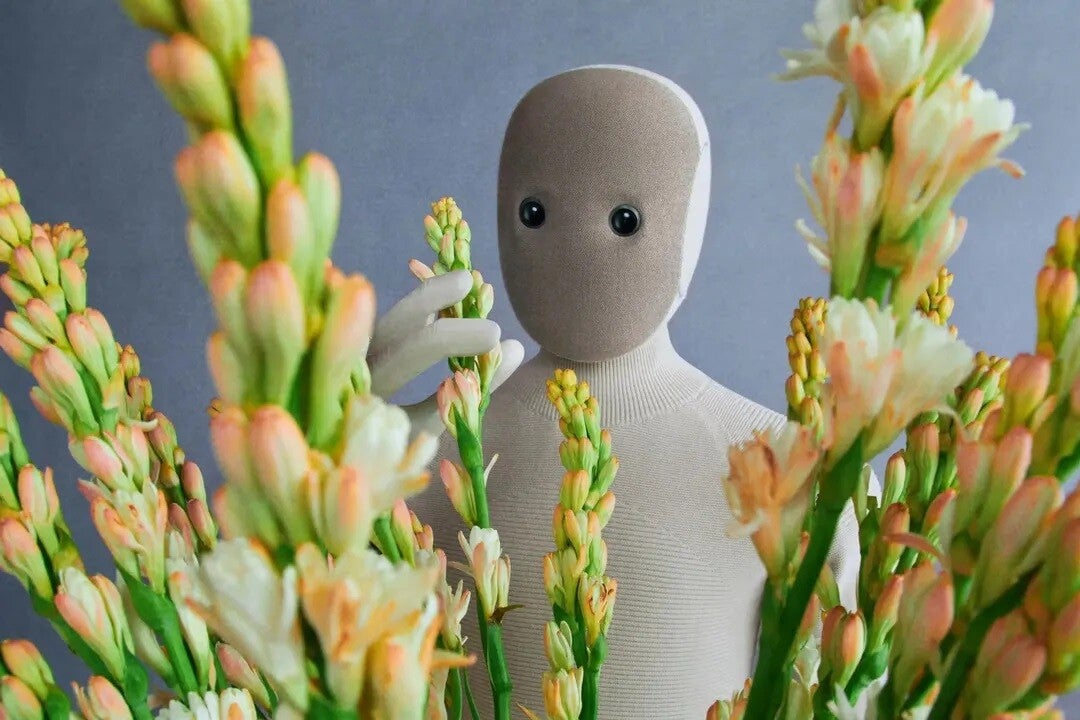
This image depicts NEO, the first humanoid robot developed by the Norwegian-American company 1X Technologies, specifically designed for domestic use. The robot stands approximately 1.65 to 1.68 meters tall and weighs 30 kilograms.
The Technology
An overview of Humanoid Robots (HR) as an emerging technology, their rapid market growth and what technically sets them apart from other AI systems.
Why the Design Matters
This section explores anthropomorphic design as the foundation of human-robot interaction, examining how physical features shape human psychology and impact decisional autonomy.
Real-life Example
Asimov's Laws of Robotics
FIRST LAW
A robot may not injure a human being or, through inaction, allow a human being to come to harm.
SECOND LAW
A robot must obey the orders given it by human beings except where such orders would conflict with the First Law.
THIRD LAW
A robot must protect its own existence as long as such protection does not conflict with the First or Second Law.
RESEARCH STRUCTURE
An Overview of the Research Project Chapters
| Chapter 1 |
|---|
| This introductory chapter sets the foundation by outlining the background and problem statement of domestic humanoid robots, mapping the current literature on embodied AI and privacy, and defining the core research question alongside its specific sub-questions. Furthermore, it details the methodology employed throughout the study and outlines the roadmap for the subsequent chapters. |
| Chapter 2 |
|---|
| Directly addressing the first sub-question, this chapter explores the technological layer by mapping international ISO standards and EU legal definitions. It analyzes the perception stack, physical sensors, and embodiment, distinguishing humanoid systems from traditional software AI, while incorporating supporting socio-technical theories on the profound impact of anthropomorphic design. |
| Chapter 3 |
|---|
| Answering the second sub-question from a normative standpoint, this chapter establishes the European legal framework by examining how current provisions, specifically the AI Act and the GDPR, address the challenges of anthropomorphic design, data harvesting, and the legal limits of protecting individuals in domestic environments. |
| Chapter 4 |
|---|
| Answering the third sub-question, this chapter focuses on the psychological adaptation and intimate personalization inherent in human-robot relationships. Moving beyond absolute prohibitions, it centers on preserving human decisional autonomy through transparency and establishing user sovereignty as the core pillar of future embodied AI governance. |


"In a properly automated and educated world, [...] machines may prove to be the true humanizing influence".
CONTACT
SHARE YOUR FEEDBACK
Feedback from readers is warmly welcomed. If you have suggestions, comments, or references that could enrich this research proposal, please feel free to share them using the form below.
© 2026 Ester Sofia Fuligni
[Draft] Research Proposal | LL.M. Law & Technology | Track Privacy and Security | Tilburg Law School
Tilburg University Warandelaan 2, 5037 AB Tilburg, The Netherlands

Create Your Own Website With Webador