The Research Problem | In a nutshell
The thesis project is structured around the following primary legal overarching question:
To what extent does the physical embodiment and anthropomorphic design of humanoid robots generate unique psychological and legal challenges within the European regulatory framework, and how can EU instruments evolve to govern intimate psychological adaptation without relying on prohibitions?
Framing the Problem
Which is further divided into the following sub-questions:

Sub-question 1
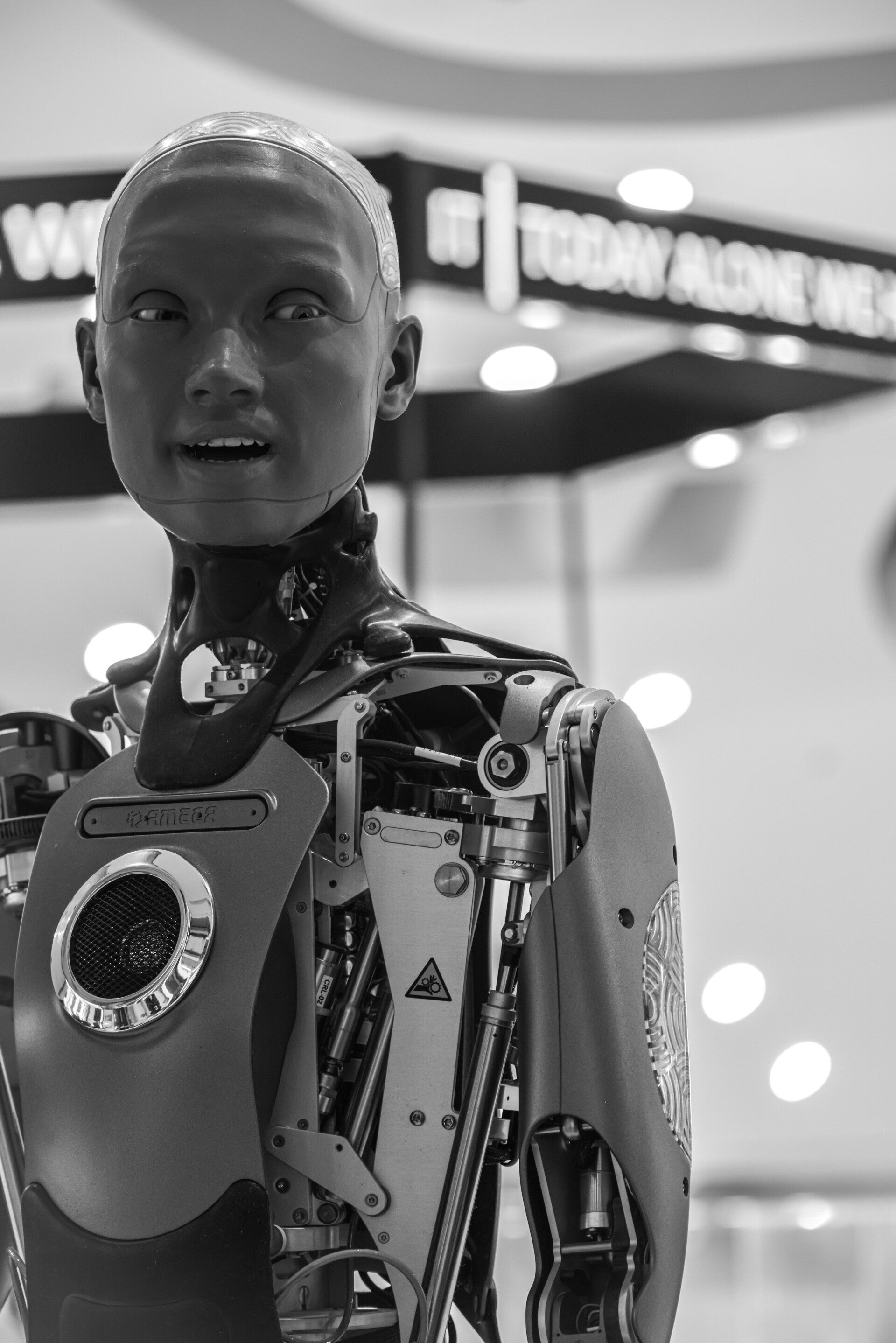
To what extent does the physical embodiment of an AI-powered humanoid robot distinguish it from other AI-powered technologies, and what role does the anthropomorphic design play in shaping the human-robot relationship?

Sub-question 2
How does the current EU regulatory framework regulate the anthropomorphic design of AI-powered humanoid robots, and what legal tensions emerge between such design features and data protection rights?

Sub-question 3
To what extent are existing European data protection and artificial intelligence instruments equipped to govern the intimate personalization and psychological adaptation elicited by the anthropomorphic design of humanoid robots, without relying on prohibitions?
Description
1. Technical aspects

2. Legal aspects

3. The Relationship

The first sub-question aims to explore and clarify the technical background for the reader by investigating the technology in res ipsa and providing the technical foundation necessary to develop subsequent legal reflections specific to that technology.
Specifically, the section will provide a definition of "AI" under both EU regulation (the AI Act) and international ISO standards. It will then distinguish between the physical dimension of AI (so-called "Embodied AI") and the significance of physical safety, which is introduced only to establish its exclusion from the scope of this research project, a choice justified by the author's primary focus on the legal impact of the psychological relationship between anthropomorphic design and the human individual.
Following this, the research project will examine the notion of "robot," and more specifically, "humanoid robot," referencing ISO standards and relevant design research. The current relevance of the subject will be highlighted throughout by continuous references to the current state of scientific research in the field, supported by reports detailing the growth of global investments and sales data for this technology.
The second sub-question aims to map out the legal framework of the issue under investigation by defining the European level as the primary legal order upon which to build the research. Specifically, the research project will identify and select all intersecting normative instruments governing this specific technology, namely, the AI Act and the General Data Protection Regulation (GDPR), while paying close attention to the pending Commission’s proposal “Digital Omnibus on EU Data Acquis” currently under discussion by the EU co-legislators. Furthermore, the discussion of secondary legislation will be preceded by references to EU primary law, specifically Article 16 of the TFEU and Articles 3(1), 7, 8, and 10 of the Charter of Fundamental Rights of the European Union, which will serve as the foundational basis for the analysis.
The third sub-question clarifies the crucial relationship between two interdependent dimensions. On the one hand, the technical and morphological aspect: the anthropomorphic design of AI-powered humanoid robots and their complex perception stack, capable of continuously collecting environmental data, via 360-degree cameras, LiDAR sensors, multiple ambient microphones, and tactile sensors on synthetic skin, along with data concerning the user's emotional and psychological state. On the other hand, the legal implications of such an interaction, with specific reference to safeguarding the individual's cognitive and psychological privacy and decision-making autonomy.
The central issue arises when the robot, leveraging the collected data, dynamically adapts and modifies its behavior and responses. It should be premised that this research project does not adopt an aprioristically defensive or paternalistic perspective, as it recognizes the immense potential for social well-being inherent in the human-machine relationship.
It is therefore necessary to investigate the scope of the prohibitions set forth by the AI Act regarding subliminal techniques or "purposefully manipulative or deceptive techniques" that undermine decision-making autonomy, while questioning the legal qualification of this technology when the user themselves desires personalization and support for personal change. It is precisely here that the structural limitation of current legislation becomes apparent: the AI Act adopts a rigidly binary approach, limiting itself to penalizing overt deception or covert coercion, while exhibiting total blindness toward that "intimate gray zone" where the user believes they are freely seeking personalization, yet undergoes imperceptible conditioning fueled by emotional attachment to the anthropomorphic design.
In this scenario, neither the AI Act nor the current GDPR framework offers an adequate mechanism to govern such personalization. The solution does not lie in preventing the robot from adapting, but rather in ensuring the user's sovereignty over this adaptation process, anchored in algorithmic transparency and the portability of the relational profile.
© 2026 Ester Sofia Fuligni
[Draft] Research Proposal | LL.M. Law & Technology | Track Privacy and Security | Tilburg Law School
Tilburg University Warandelaan 2, 5037 AB Tilburg, The Netherlands

Create Your Own Website With Webador