Why design matters
Physical embodiment and anthropomorphic features are far from mere aesthetic choices. In humanoid robotics, industrial and interaction design profoundly shape human psychology by driving intimate adaptation and emotional attachment.
This dynamic raises critical legal questions under European frameworks, moving from absolute prohibitions toward the imperative of preserving user sovereignty and safeguarding human decisional autonomy against subtle manipulation.
Applying Calo's approach: A Fundamental distinction
Applying Brey’s ATE methodology at the artefact level, Humanoid Robot (HR) technology is examined through Calo’s three essential characteristics: (1) embodiment, (2) emergence, and (3) social valence. The combination of embodiment and social valence distinguishes HR from software-only AI systems.

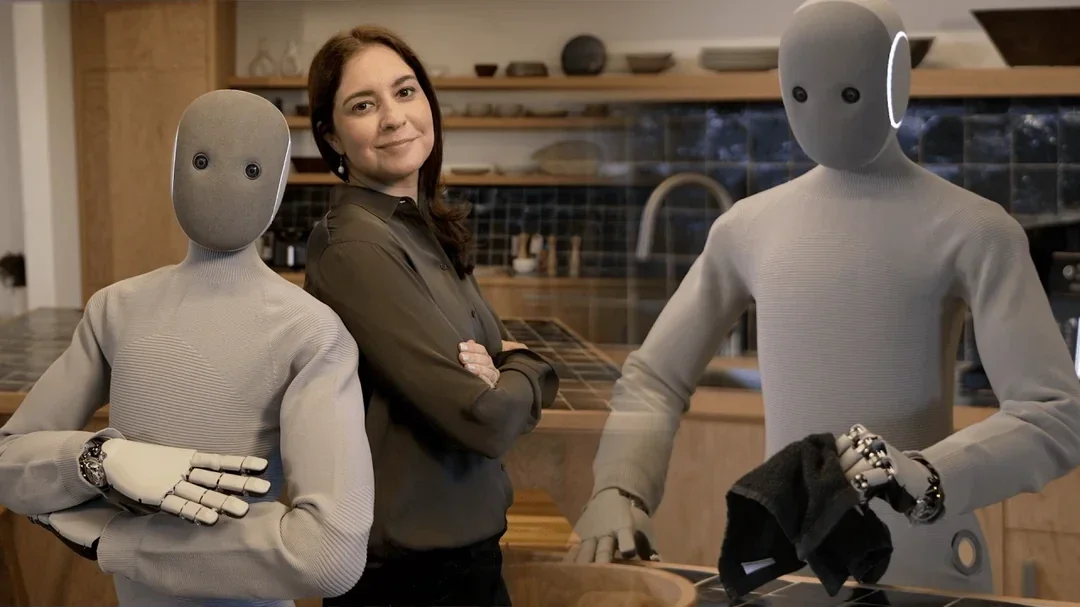
Embodied presence and psychological conditioning
Physical presence and anthropomorphic design systematically generate empathy and trust responses in users, a form of psychological conditioning that precedes and shapes any subsequent act of consent.
At the application level, the domestic deployment context introduces further specificities: the continuous collection of personal data, including special categories of data, in an intimate environment.

Balkin's salience approach and deceptive techniques
According to Balkin’s salience approach, the physical and relational presence of humanoid robots makes legally salient a critical question: whether anthropomorphic design constitutes a "subliminal or deceptive technique" under the Artificial Intelligence Act, or whether it can be reconciled with European governance frameworks. Rather than adopting an outright prohibitionist stance, this research critically evaluates the empathy and trust generated by embodied systems not as inherently illicit manipulation, but as a subtle psychological dynamic that directly engages the protection of human decisional autonomy.
While strict regulatory interpretations, such as those found in data protection frameworks regarding consent, highlight the risks of undue influence, a purely restrictive approach fails to account for the constructive potential of human-robot interaction. Instead, the core legal challenge lies in governing intimate adaptation without stifling innovation.
Furthermore, by applying Lawrence Lessig's 'Code' as a regulatory modality, this research frames anthropomorphic design as "hardware-embedded captology", persuasive technology embedded within the physical architecture of the artifact. Rather than arguing that this physical dimension warrants prohibition, this perspective addresses a normative lacuna: extending legal scrutiny, historically focused on software interfaces, to the subtle steering mechanisms of physical design.
Finally, while progressive affective responses and emotional attachment naturally challenge the permanence of user agency over time, the objective of this research project is not to prohibit emotional bonding, but to establish robust regulatory safeguards that ensure user sovereignty and autonomous decision-making are actively preserved throughout the human-robot relationship.
© 2026 Ester Sofia Fuligni
[Draft] Research Proposal | LL.M. Law & Technology | Track Privacy and Security | Tilburg Law School
Tilburg University Warandelaan 2, 5037 AB Tilburg, The Netherlands

Create Your Own Website With Webador